
Discover how yin yoga can help you slow down, stretch deeply and reconnect with your body.
Table of contents
My Journey with Yoga
I’ve been more of a yoga practicer than a practitioner for many years, dipping in and out whenever life allowed. Last September, though, I committed to making it a regular part of my week, attending classes at least twice.
The hoped-for abs still haven’t made an appearance, but I’ve definitely become slimmer, stronger, and noticeably more energetic. I’ve even developed arm muscles—always welcome when we’re trying to outwit that inevitable arm jiggle that seems to arrive later in life!
Resource: Blog Insight Post – How to Find Your Yogic Self Through Practice – Not the Skinny Place
When Life Gets in the Way
One Friday I simply couldn’t make my usual 8 a.m. yoga class after the school run. Most of Wichita had spent half the night listening to hailstones crashing onto roofs and cars. Reports suggested some were the size of tennis balls, so sleep had been in rather short supply.
Later that afternoon, feeling much more awake, I browsed through my collection of yoga DVDs and rediscovered Paul Grilley’s Yin Yoga: The Foundations of a Quiet Practice.
There were two classes, each around 70 minutes long. I thought I’d be doing well if I managed half of one.
Instead, something rather unexpected happened.
What Is Yin Yoga?
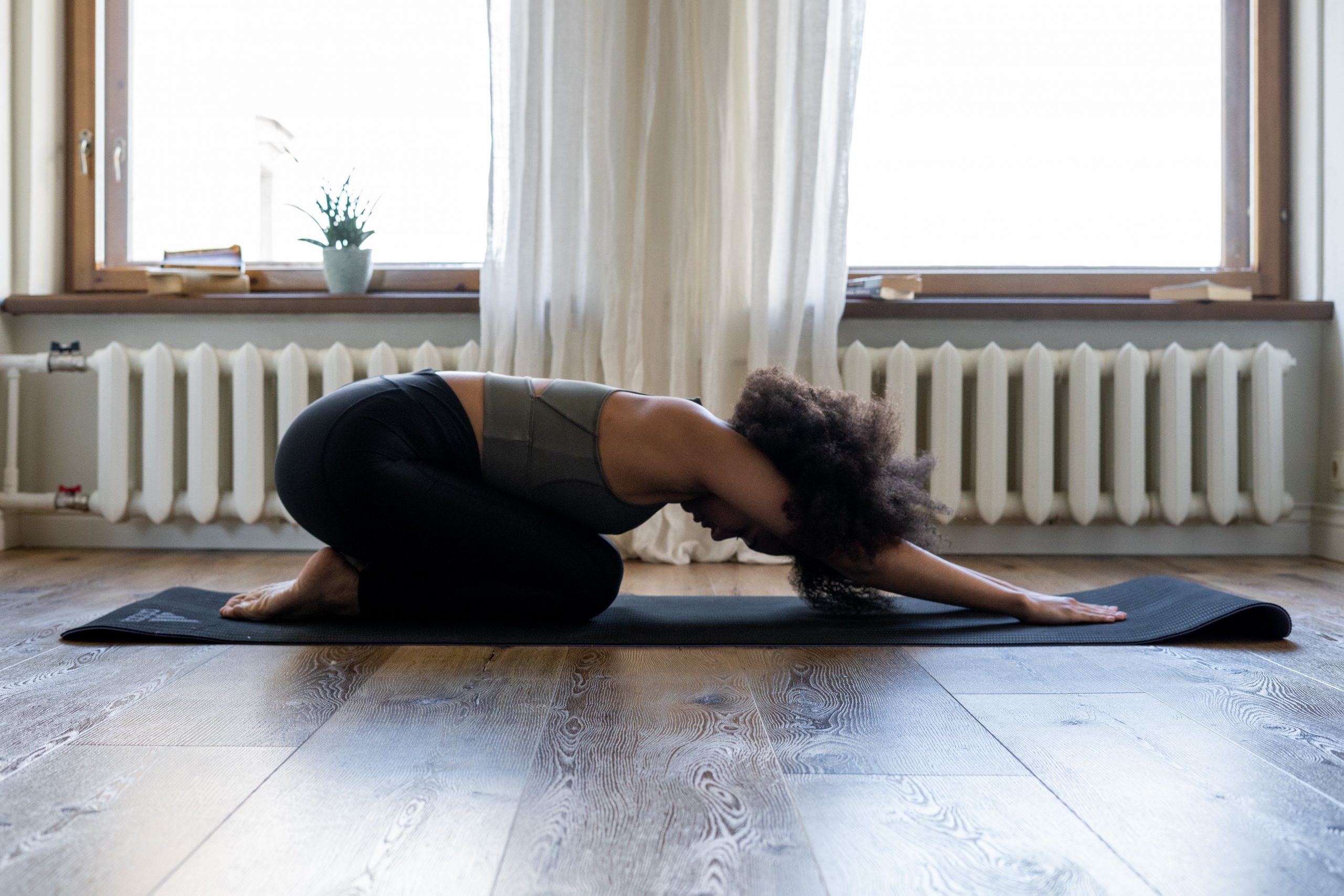
Unlike more dynamic styles of yoga, yin yoga focuses on stillness. Rather than flowing from pose to pose, you remain in each posture for around two to four minutes, allowing your body to soften gradually into the stretch.
It can feel surprisingly intense, yet deeply meditative at the same time. During each pose, you’re encouraged to settle, breathe, and make small adjustments if needed to release tension or discomfort.
In Traditional Chinese Medicine, Yin energy is associated with:
- stillness
- receptivity
- the feminine principle
- the moon
- shade
- the quieter side of nature
Yang energy, by contrast, represents movement, activity, warmth and outward expression.
Rather than seeing Yin and Yang as opposites, they’re better understood as complementary forces that continually balance one another.
Using the same perspective Yang Energy (pronounced ‘Yong’) is
- positive, active, male principle in nature
- south or sunny side of a hill
- north of a river.
More Than Stretching Muscles
The philosophy behind yin yoga blends Taoist principles, Traditional Chinese Medicine and elements of classical yoga.
Instead of concentrating mainly on muscles, yin yoga gently works into the body’s deeper connective tissues—ligaments, fascia, tendons and joints. The slower pace allows these tissues time to respond in ways that faster-moving styles often can’t.
My Experience with Yin Yoga
I chose the hips and lower back practice, the other class focusing on the spine.
Paul Grilley is an excellent teacher, explaining not only how to move into each pose but also why every body is different. He demonstrates with students of varying ages, body shapes, and levels of flexibility, making it clear that yoga isn’t about forcing yourself into an ideal position.
That was refreshing. I’ve always had particularly tight hips and a stiff lower back, despite being naturally flexible in other directions. I can happily reach well beyond my feet, yet hip-opening poses have always challenged me.
As I settled into each posture, I became aware of where my body resisted. Then, almost imperceptibly, the muscles began to soften.
It’s a wonderful feeling when areas that have held tension for months—or even years—finally begin to let go.
About twenty minutes into the practice, I noticed a deep sense of calm washing over me. Before I realised it, the full seventy minutes had passed. One of the things I love most about yoga is how completely it changes my sense of time.
An Interesting Connection
During the class, Paul explained that the right hip and lower back relate to the Gallbladder Meridian in Traditional Chinese Medicine.
I’d experienced gallbladder problems the previous year, so hearing this immediately caught my attention. Whether you see these connections as energetic, symbolic, or simply interesting, it certainly resonated with my own experience.
How I Felt Afterwards
After a typical yoga class, I usually feel energised and relaxed.
After this yin yoga practice, it was different.
I experienced gentle internal shaking and quivering, something Paul explained as Yang energy beginning to rebalance after the longer-held Yin postures.
Whatever the explanation, I certainly noticed the effects.
Later that evening I found myself cooking dinner and cleaning the kitchen at the same time—almost unheard of in my house!
I’ve learned over the years that when I do energy work that really suits me, one of two things usually happens: I either sleep incredibly well, or I experience a wonderful burst of energy.
This time, it was definitely the latter.
Would I Recommend Yin Yoga?
Absolutely.
If you’ve never tried yin yoga, I think it’s well worth exploring, especially if you carry tension in your hips, lower back or connective tissues, or if you’re simply looking for a slower, more mindful style of practice.
For me, it wasn’t just about stretching. It was about creating space, listening more deeply to my body and discovering that sometimes the greatest transformation happens when we slow down rather than speed up.
Have you tried yin yoga?